

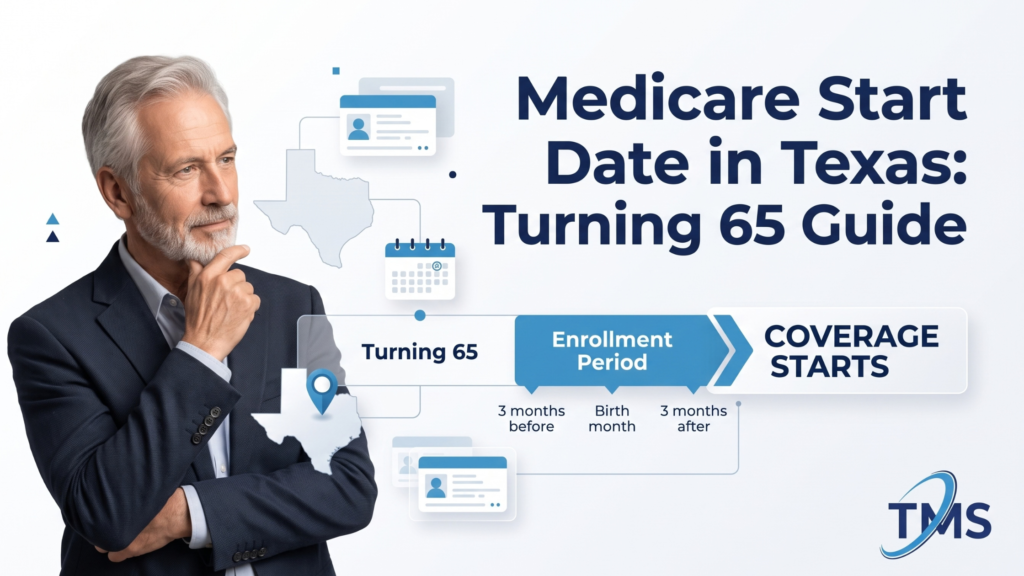
If you turn 65 in Texas, your Medicare start date depends on when you enroll during your Initial Enrollment Period and whether you are already receiving Social Security benefits. If you enroll during the three months before your birthday month, Medicare generally begins on the first day of your birthday month. Different timing applies if your birthday is on the first day of a month or if you enroll during your birthday month or later.
Understanding the timing early can help you avoid rushed decisions and possible Part B enrollment penalties. Texas Medicare Solutions is a BBB-accredited Medicare insurance agency, and our licensed insurance agents help Texas seniors understand the rules in plain language before they review their coverage choices.
What Is the Initial Enrollment Period at Age 65?
Your Initial Enrollment Period, or IEP, is the first major Medicare enrollment window for most people turning 65. It lasts seven months:
- Three months before the month you turn 65.
- The month you turn 65.
- Three months after the month you turn 65.
For example, if your 65th birthday is in October and is not on October 1, your IEP generally runs from July through January. Starting the process before October may help you line up your Medicare effective dates with the end of other coverage.
The Social Security Administration handles enrollment for Part A and Part B, so confirm your personal dates with Social Security or Medicare.gov.
If your birthday falls on the first day of a month, Medicare timing follows a different calendar rule. In general, Medicare treats you as reaching age 65 in the previous month for enrollment timing purposes. That is one reason it is useful to check your own date rather than rely on a neighbor’s or family member’s timeline.
When Do Medicare Part A and Part B Begin?
Part A helps cover inpatient hospital care, skilled nursing facility care in qualifying circumstances, hospice care, and some home health care. Part B helps cover medically necessary doctor services, outpatient care, preventive services, and medical equipment. Together, they are often called Original Medicare.
Many people are automatically enrolled in Part A and Part B if they are already receiving Social Security benefits when they become eligible. If you are not receiving those benefits, you may need to enroll through Social Security.
Part A may be premium-free for people with enough qualifying work history, while Part B generally has a monthly premium. Your personal record determines how these rules apply.
If you enroll during the three months before your birthday month, coverage generally begins on the first day of your birthday month. If your birthday is on the first day of the month, coverage generally begins on the first day of the previous month.
If you enroll during your birthday month or during the final three months of your Initial Enrollment Period, coverage generally begins on the first day of the month after you sign up.
Check the date shown on your Medicare approval notice and keep it with your records.
What If I Still Have Health Insurance Through Work?
If you or your spouse is actively working and you have group health coverage, your Medicare decision may be different. The size and type of the employer plan, who is working, and whether the coverage is based on current employment can affect how Medicare coordinates with that insurance.
Do not assume that COBRA, retiree coverage, or an individual policy gives you the same enrollment protections as active employer coverage.
Ask your benefits administrator how your coverage works with Medicare, then confirm your enrollment timing with Social Security. Keep written answers, especially if your last day of work and your insurance end date are different.
A Health Savings Account also deserves attention. Once you are enrolled in Medicare, federal HSA contribution rules change. In some situations, premium-free Part A can begin retroactively when someone enrolls after age 65.
If you use an HSA, ask a qualified tax professional or benefits administrator when contributions should stop and how your Medicare start date may affect your account.
Could Waiting Create a Part B Penalty?
People who delay Part B without qualifying coverage may face a late enrollment penalty. The Part B penalty is generally based on each full 12-month period that you could have had Part B but did not enroll.
A qualifying Special Enrollment Period may allow you to delay Part B without that penalty, but the details matter. The safest approach is to identify your coverage source, confirm whether it is based on current employment, and document the dates.
Medicare.gov and Social Security can explain the official rules for your situation.
What Should I Do Three Months Before Turning 65?
- Write down your birthday month, current coverage, employer status, and expected retirement date.
- Review your Social Security and Medicare notices for enrollment instructions.
- Ask your employer benefits office how your group plan coordinates with Medicare.
- Make a list of doctors, prescriptions, pharmacies, and regular care locations.
- Compare coverage categories only after you know when Part A and Part B will begin.
- Save copies of applications, confirmation numbers, and effective-date notices.
Medicare decisions are personal. A licensed insurance agent with Texas Medicare Solutions can explain general differences among Medicare Advantage, Medicare Supplement, and prescription drug coverage while helping you organize the questions that matter for your situation.
You can also contact Medicare.gov or your local Texas State Health Insurance Assistance Program (SHIP) for unbiased information about available choices.
Frequently Asked Questions
When Does Medicare Usually Start If I Turn 65 in Texas?
If you enroll during the three months before your birthday month, Medicare generally starts on the first day of the month you turn 65. If your birthday is on the first day of the month, coverage generally begins the first day of the previous month. If you enroll during your birthday month or later in your Initial Enrollment Period, coverage generally begins the month after you enroll.
How Long Is the Initial Enrollment Period?
It generally lasts seven months: three months before the birthday month, the birthday month, and three months after it. Different calendar treatment applies when your birthday falls on the first day of the month.
Where Can I Confirm My Official Medicare Start Date?
Check your Medicare notice and contact Social Security or Medicare.gov for an official answer about your personal record.